Objective
Our Resources/References: (1) DeRue, D. Scott. (2009). Quantity or Quality? Work Experience as a Predictor of MBA Student Success. (2) Talento-Miller, E. (2017). Differential Validity and Differential Prediction of the Graduate Management Admission Test® Exam. Graduate Management Admission Council (G etc MAC). Research Report Series, RR-17-01. The process of applying to MBA programs is highly competitive, with applicants vying for limited spots in top-tier schools. Admissions committees consider various factors such as GMAT scores, undergraduate GPAs, and work experience. This project aims to analyze an MBA admissions dataset to identify which factors are most predictive of admission success. By understanding these trends, prospective students can gain insights into which areas to focus on during their applications. Additionally, admissions committees can benefit from streamlined decision-making tools based on historical applicant data. This analysis is particularly relevant as MBA programs globally seek to attract a diverse, qualified pool of candidates amid growing demand for advanced business education. From this dataset, we can gain meaningful information on what it takes for a student to be admitted in such a rigorous and demanding program. This information would be valuable for prospective students to start preparing if they are interested in applying to this MBA program or a similar one.
Data Information
The data set we are choosing to use is the Wharton Class of 2025 MBA Admission Dataset on Kaggle. We would have liked to use one for NEU, but we could not find any readily accessible datasets of the correct parameters. This dataset has 10 attributes, and over 6000 entries, which we have cleaned and filtered to reach less than the 5000 entries detailed in the assignment. A few of the most important columns that we anticipated using during the research/exploration part of this project are Gender, Admissions, GPA, Work Experience, and Major. There were a few null values mainly within the Admission and Race column but that was dealt with by replacing all of the null values in the Admissions columns with 'Rejected'. This was appropriate since the only other values in that column were Waitlist and Admit so it made sense to replace Null with Rejected. After this step there were still a few null values left in the Race column, and we removed those rows since there were very few null values left. After these data cleaning steps, we were left with around 4300 rows. This dataset is substantial and will give us a lot of room for investigation into what makes a student get into such a prestigious MBA program.
GPA, Gender/Race, and Work Experience Analysis
By examining GPA data from accepted and rejected applicants, potential MBA applicants can see what GPA they should aim for or how likely their chances of acceptance are based on GPA. We can see an average of around 3.35 for accepted applicants, but a vast majority are applying with around a 3.2 average. Potential applicants should aim to be on the right side of the normal distribution. We can also observe a harsh cutoff around the 3.2 gpa range for MBA applicants, indicating a point where applicants should definitely be above to have a chance at acceptance.
GMAT Analysis
What we Learned
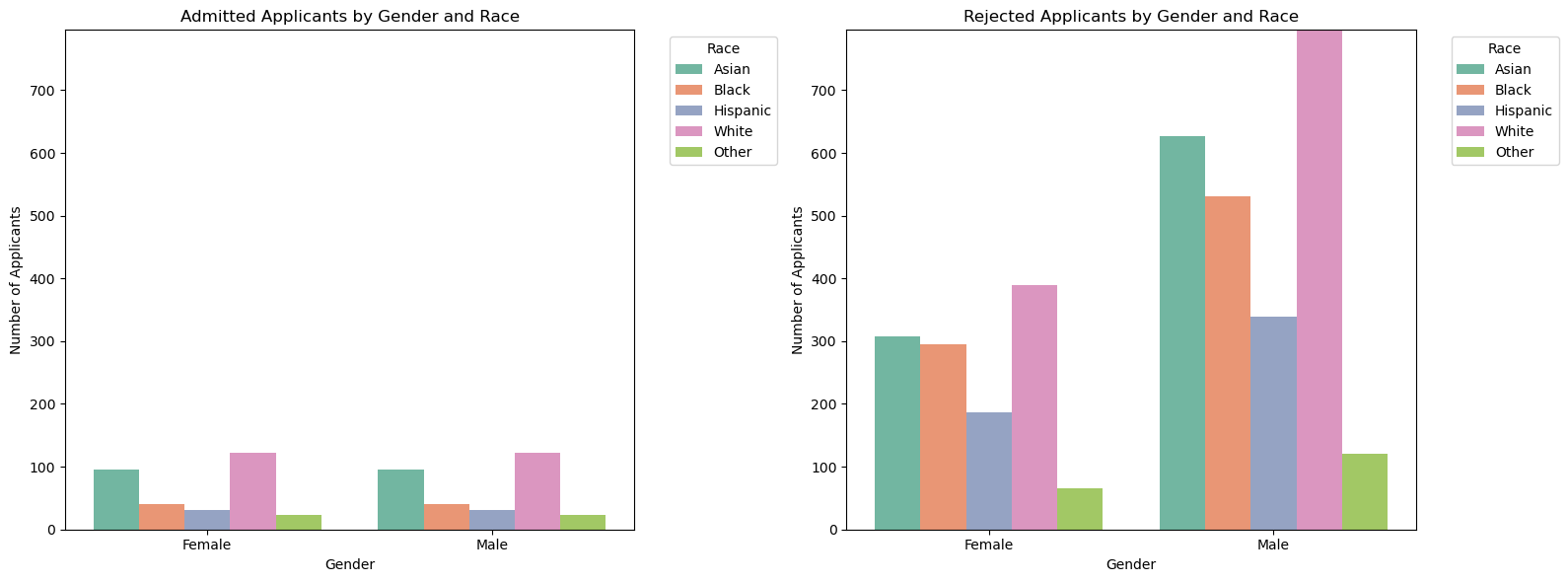
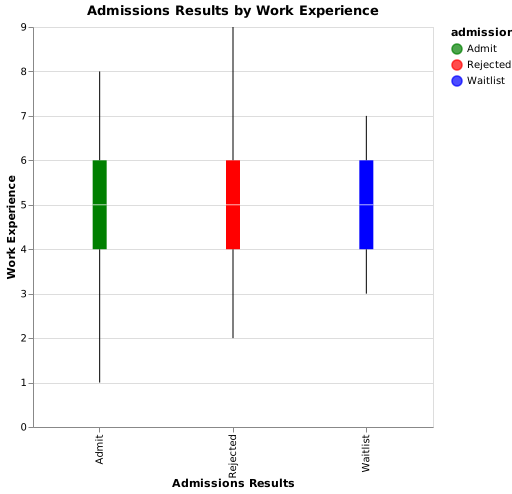
After investigating our dataset, we have come to a few interesting conclusions supported by our visualizations. The first conclusion we came to was that GPA and the GMAT score of each applicant is arguably two of the most important aspects when it comes to deciding the application result. After analyzing the interactive scatter plot that compared GMAT and GPA, we found that the majority of applicants had a very high GPA and a corresponding high GMAT score. However, it is important to point out that there were also students that didn’t have great standardized scores that were admitted and this was likely due to other factors in their application that made them stand out. The next attribute we looked into was if work experience affected the admissions results. From this graph we realized that work experience was not that high priority on the list of attributes and did not affect the outcome of the admissions results that substantially. The next thing we investigated was how race and gender affected the admissions results and we found that less women applied in general to this program and as a result, less women were accepted. So while the same percentage of men and women were admitted, less women were accepted overall due to the lack of applications. Other than that there were no significant discrepancies with the race attribute. Overall, we found that GPA and GMAT score affected the admissions results the most significantly out of all of the attributes.